Study oboe at OU
Prospective Students
Welcome — I'm really glad you're here. Whether you're a high-schooler getting ready for your first college audition or an experienced player choosing a graduate program, this page will help you picture what studying oboe at the University of Oklahoma could look like. Pick your path:
So you're thinking about majoring in oboe. That's exciting — and a little nerve-wracking, I know. The good news: you don't need to have it all figured out yet. You just need to be willing to work, and to fall in love with getting better.
What oboe life looks like at OU
Oboists get a lot of attention here. You'll study playing fundamentals, organization, and practice in studio class, and dig into the great orchestral repertoire from Bach to the present. We meet weekly as a group to make reeds — a systematic approach, with benchmark reed "exams" and objective reed tests designed to make you a genuinely confident reed maker — and OU has a dedicated reed room with university-owned gouging machines and equipment. In private lessons we build a firm command of the instrument through etudes, repertoire, and a thorough warm-up and technical regimen. And you'll play a lot: Wind Symphony and Symphony Orchestra, chamber music, convocation and studio recitals, and the annual concerto competition. OU even owns three fine English horns and an oboe d'amore for student use.
Degrees for oboe majors
- BMBachelor of Music in Oboe. The performance degree, for a career in performing and/or private teaching — the most flexibility and practice time, plus four semesters of chamber music.
- BMEBachelor of Music Education. To become certified to teach middle- or high-school band; includes the Pride of Oklahoma, methods classes, and a capstone semester of student teaching.
- BMABachelor of Musical Arts. The performance degree combined with a minor outside music, for a broader scope.
- BABachelor of Arts in Oboe. Highly flexible, with 40+ elective hours outside music — a favorite for double majors.
- MinorMusic Minor in Oboe. Keep playing and stay connected to the studio while you major in something else.
The audition
Admission is a two-step process: first you apply to OU, and once accepted you audition for the School of Music. For woodwinds, you'll prepare two contrasting works — one lyrical and one technical, in different styles and tempos — from the standard repertoire (movements of sonatas, concerti, or other solo works; an etude may stand in for the solo work). We'll hear you play, ask you to sight-read a little, and then just talk and answer your questions (parents and friends are welcome). A live audition is preferred, though a recording may be possible if travel isn't. Honestly, I'm not listening for perfection — I'm listening for musicality, potential, and someone I'd love to spend four years teaching. For current audition dates, full requirements, and scholarship details, see the Undergraduate Admissions & Auditions page →
Scholarships — read this part
Here's something many students don't realize: scholarships for OU oboe majors are awarded from your spring audition, on musical merit, and they can help offset — or completely cover — the cost of tuition. Your audition isn't just how you get in; it's how you earn support. So it's worth preparing well, and worth reaching out to me early so I can help you put your best foot forward.
Your next steps
- Reach out to meSend a quick email and let's start a conversation — I'd love to hear about your playing and answer your questions. I'm always glad to set up a sample lesson, in person or over Zoom. Get in touch →
- Apply to OUComplete your university application. OU Admissions →
- Register for a School of Music auditionSign up for an audition date. Audition registration →
- PrepareUse the studio's guides and warm-up materials to get ready. Studio resources →
- Come visitTake a sample lesson, meet current oboe majors, sit in on studio class and a large-ensemble rehearsal — it's the best way to know if OU is home.
Choosing a graduate program means choosing a teacher, a studio culture, and a place to spend some of the most formative years of your musical life. I don't take that lightly, and neither should you. Here's what OU offers — and what makes this studio distinct.
Degrees
- MMMaster of Music in Oboe Performance — degree sheet, requirements, and audition dates
- DMADoctor of Musical Arts in Oboe Performance — degree sheet, requirements, and audition dates
- MMEMaster of Music Education — for those focused on teaching
Dedicated oboe pedagogy coursework is woven through the graduate experience — see "What sets this studio apart" below.
These are serious, repertoire-driven degrees. By your first master's recital you'll be performing works on the level of the Mozart Concerto, Bozza's Fantaisie Pastorale, and Ligeti's Six Bagatelles; doctoral study reaches repertoire like the Silvestrini Études, Berio's Sequenza VII, and Pasculli — with the reed-making fluency to sustain it (a playable reed from gouged cane in 30 minutes at the master's level, 20 at the doctoral).
What sets this studio apart
Plenty of programs will help you play your excerpts. Here's what you'll get here that you won't everywhere:
- —Reed making you can rely on. A systematic, repeatable method, so reeds stop being a source of dread and start being a tool you control.
- —Practice that actually works. A deliberate-practice approach grounded in the research on how expertise is really built.
- —Real pedagogy training. You'll leave ready to teach, not just to play — a genuine edge on the job market.
- —A teacher still in the field. I'm an active Principal Oboe, soloist, and chamber musician, not just a coach.
- —You'll perform. Orchestra, chamber, and solo opportunities in a large, active school of music.
Want a feel for studio life and the people in it? Current and former students are all over our Instagram — @ou.oboestudio.
And the outcomes speak for themselves. In just a few years, our graduates have gone on to top programs — a master's at Indiana University with Linda Strommen, plus acceptances at Cincinnati's CCM, UW–Madison, and LSU — and into the field as public-school band directors and college double-reed faculty. Meet the studio →
Assistantships & funding
Graduate study is a serious commitment, and funding matters. Every applicant is automatically considered for a graduate assistantship — there's no separate application — and the oboe studio itself has a Graduate Assistant position that helps mentor undergraduates in technique and reed making. Assistantships are typically awarded for the fall and spring together, so to get full consideration you'll want your complete application in by the December 1 deadline. (Spring-entry assistantships are rare, so aim for a fall start.)
Applying & the audition
Graduate admission runs through the OU Graduate College and School of Music. You'll submit the online application with your materials — including a résumé and a short personal statement (about two to three pages) on your path and your goals — and audition, in person when possible. I want to hear your artistry and understand where you want to go, because a good graduate match is a mutual decision. Everything you need — degree sheets, application steps, audition dates, and repertoire — is on the OU Graduate Admissions page and the MM and DMA woodwind pages. (International applicants: see the Graduate College's international admissions guidance.)
Your next steps
- Email me firstBefore you apply, let's talk. A graduate decision should go both ways, and I'd like to know you. Get in touch →
- Schedule a visit or sample lessonThe surest way to know whether this studio is your place.
- Apply by December 1Submit your Graduate College application and materials and register your audition, aiming for the December 1 deadline for full funding consideration. Apply to the Graduate College →
- Prepare and schedule your auditionI'll help you get ready and know what to expect.
Why students choose this studio
Serious about the craft, generous with the person
A warm, honest room
A close-knit studio where you're pushed and supported in equal measure. You'll be challenged — and you'll belong.
Reeds, demystified
A step-by-step method that turns reed making from a source of anxiety into something you can do reliably, on demand.
Practice that works
Learn how to practice, not just what to practice — habits and strategies grounded in how real skill is built.
A teacher who performs
Study with someone active on stage as a principal oboist, soloist, and chamber musician.
Room to perform
Orchestra, chamber music, and solo opportunities in one of the region's most active schools of music.
Built for your future
Whether you want to play, teach, or both, you'll graduate ready — with the skills and the confidence to use them.
Come see for yourself
Visit the studio
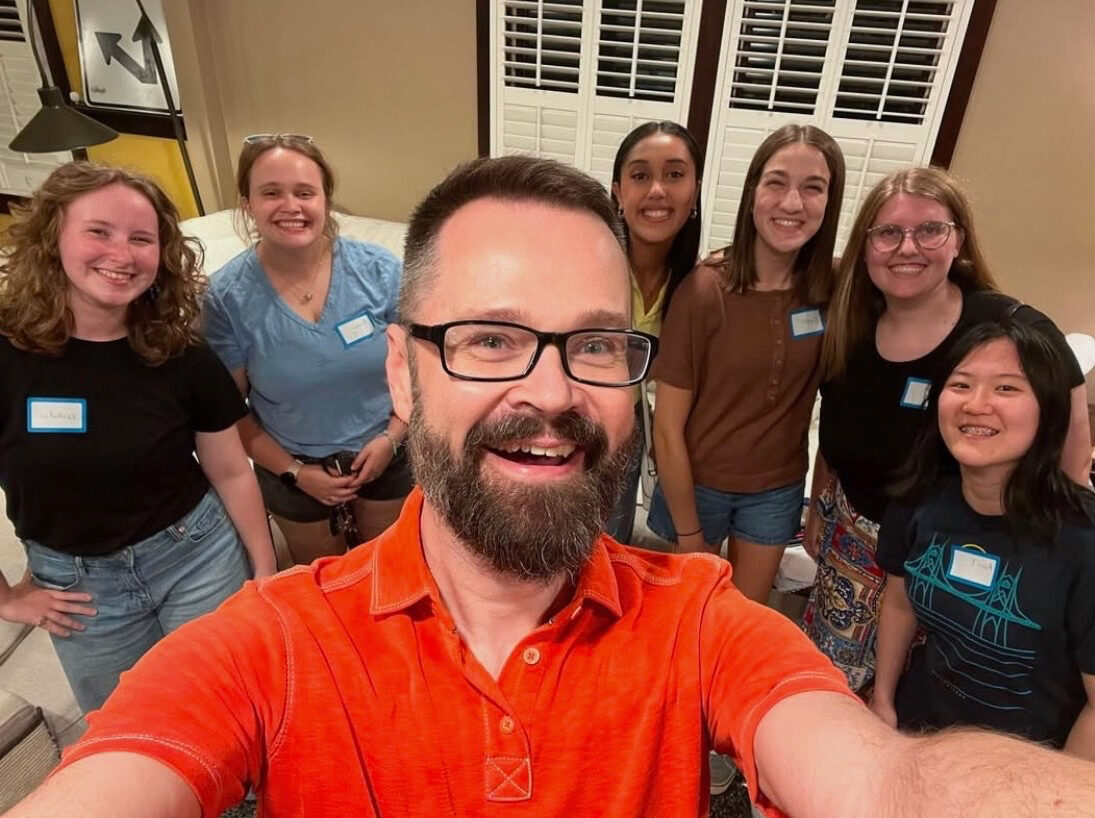
Reading about a studio only tells you so much. A visit day tells you the rest. A typical one starts with a sample lesson in my studio, then you'll observe a class or two, sit in on a large-ensemble rehearsal (Wind Symphony or Orchestra — sometimes you can even play along), and have lunch with current oboe students, on me, for the real insider view. I tailor each visit to your path, whether that's music education, performance, or graduate study — just say the word and we'll build your day.
Questions & answers
The things students usually ask
I'm nervous about my audition. What are you actually looking for?
Do I need to make my own reeds already?
Can I take a sample lesson or visit before I decide?
What if I'm not sure I'm good enough?
Is funding available for graduate students?
How do scholarships work for undergraduates?
Still have questions?
Let's talk
The best decisions in music tend to start with a conversation. Wherever you are in the process, I'd genuinely love to hear from you.